WeCheck
Building clear product experiences for a complex rental and fintech ecosystem
Chapter 01
Overview
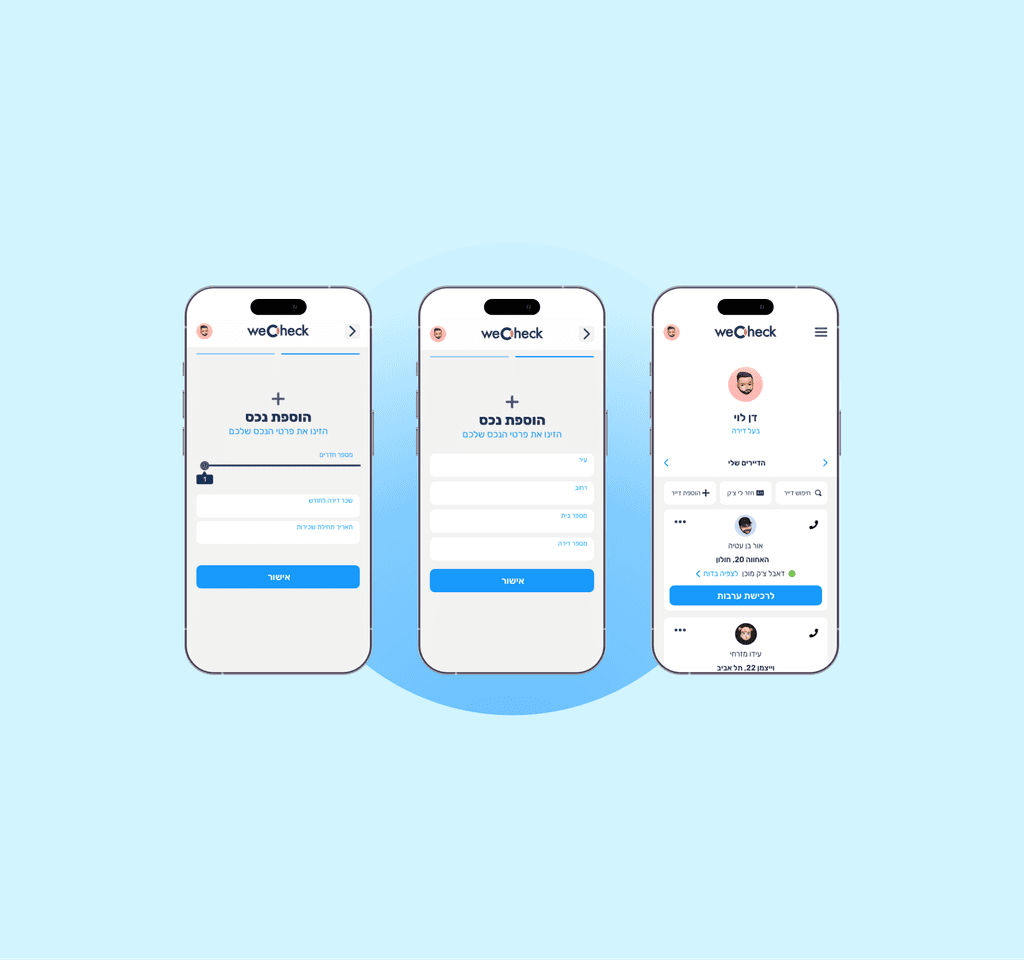
WeCheck builds financial and real-estate products for landlords, tenants, and property professionals.
I joined as the company’s first Product Designer and helped establish its product and visual design foundations.
My work covered UX architecture, product flows, interaction design, high-fidelity UI, prototyping, dashboards, financial products, and design-system development.
I worked closely with product, engineering, marketing, and company leadership across multiple products and user types.

Chapter 02
The Challenge
Rental and financial products often involve long processes, sensitive information, eligibility requirements, financial decisions, and multiple stakeholders.
Users need to understand what information is required, why it is required, what they are agreeing to, and what happens next.
At the same time, the business needs to support different user types, operational requirements, risk processes, and financial products.
My role was to simplify these experiences without hiding the complexity required by the product.
Chapter 03
My Role
As the first Product Designer, my role extended beyond individual screens or features.
I helped establish the product-design foundation across the company.
My responsibilities included:
- UX architecture
- Multi-step product flows
- Interaction design
- High-fidelity UI
- Product prototyping
- Dashboard design
- Financial-product experiences
- Design-system patterns
- Collaboration with product and engineering
- Supporting product implementation
A major part of the role was creating reusable structures that allowed multiple products to evolve within a consistent system.
Chapter 04
Rental Guarantees
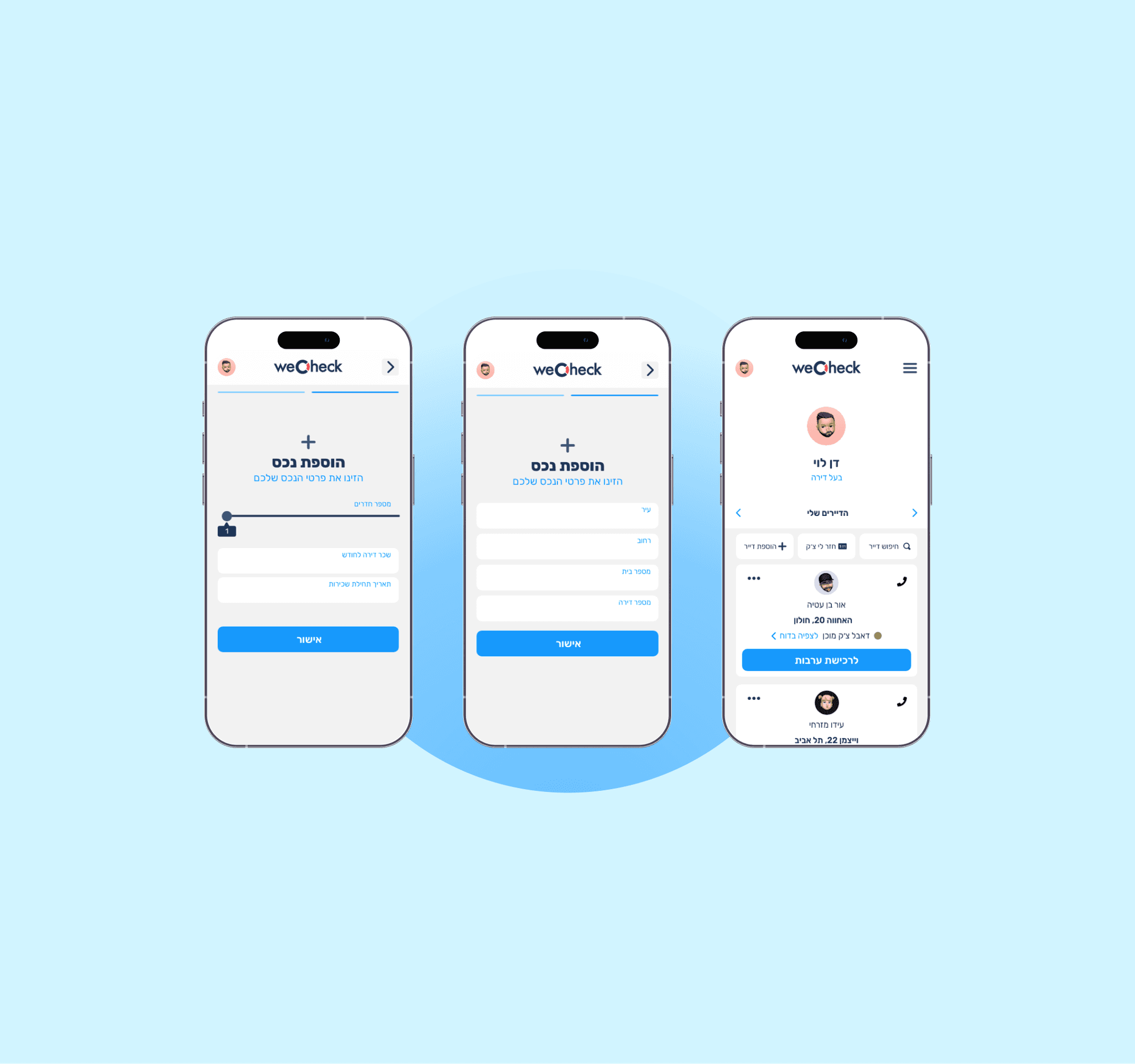
Rental guarantees required users to move through financial decisions, eligibility information, pricing, personal details, and approval steps.
I designed progressive flows that broke these decisions into smaller and clearer stages.
The goal was to keep users oriented throughout the process - making it clear what was required, what they were receiving, and what would happen next.
Chapter 05
Tenant Screening & Reports
Tenant screening involved transforming multiple sources of information into something useful and understandable for landlords.
I designed structured reports and related flows that organized questionnaire data and background information into a clear hierarchy.
The challenge was to create a credible and useful decision-making tool for landlords while maintaining a respectful experience for tenants.
Chapter 06
Property Management
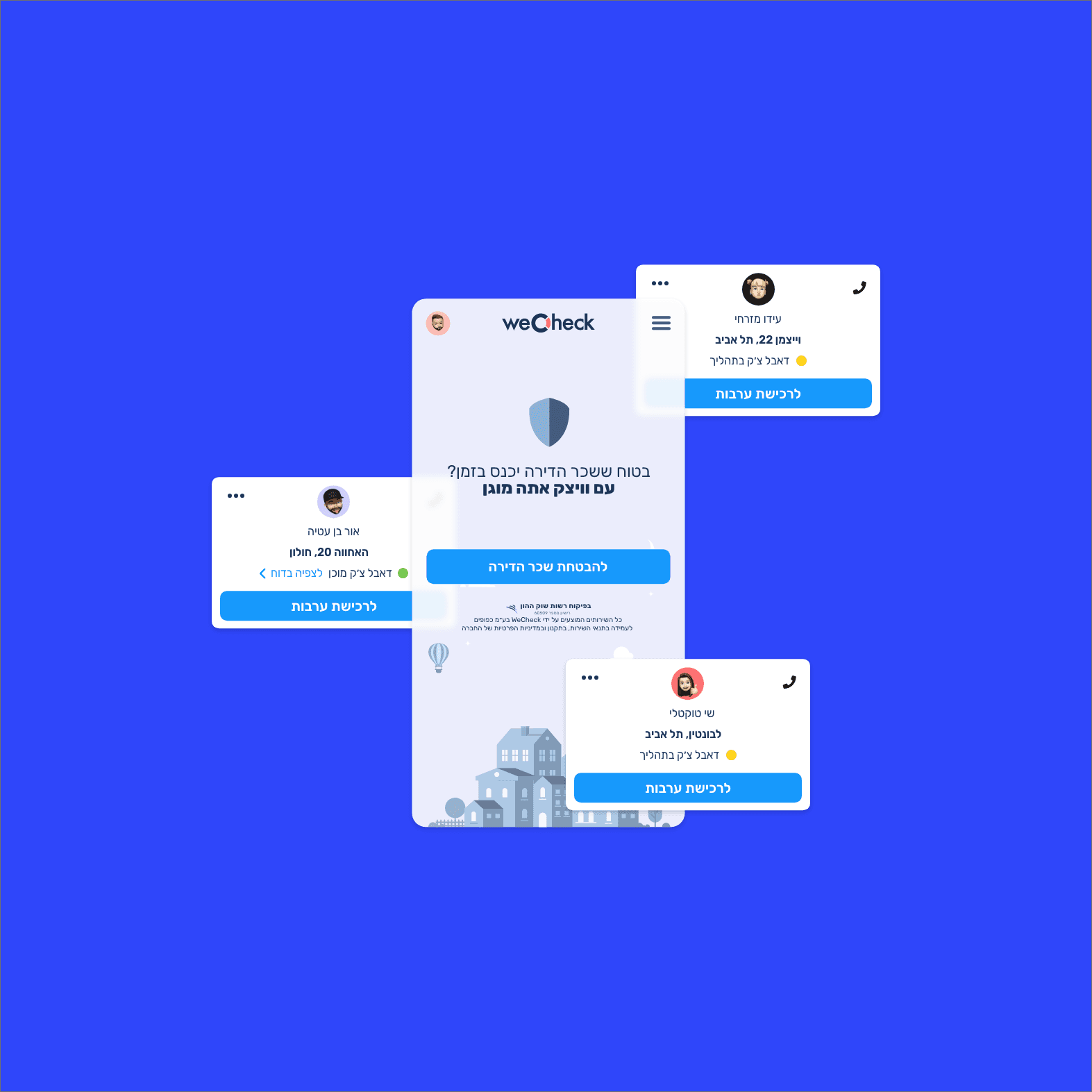
WeCheck also supported landlords and property professionals managing multiple properties and tenants.
I designed dashboards and workflows for managing properties, tenants, statuses, payments, and operational tasks.
The interfaces needed to work for both individual landlords and more complex property-management use cases, requiring a system that could scale with the amount of information being managed.
Chapter 07
Data-Driven Rental Tools
I also worked on products that helped users explore rental-market information through data.
These experiences included map-based interfaces and property-level information designed to make complex market data easier to understand and navigate.
The design challenge was to present dense information while maintaining clarity and usability.
Chapter 08
Design System
As WeCheck’s product ecosystem expanded, consistency became increasingly important.
I built reusable UI and interaction patterns across onboarding, forms, dashboards, financial flows, navigation, and data-heavy interfaces.
The design system was not only about visual consistency.
It created a shared product language that allowed a small team to design and ship new experiences faster while maintaining consistency across products.
Chapter 09
Designing for Complexity
One recurring challenge across WeCheck was determining how much information to show at each stage of a flow.
Instead of exposing all of the underlying complexity at once, I used progressive disclosure, clear hierarchy, reusable interaction patterns, and structured feedback states to help users move through complex processes with confidence.
This approach became a recurring principle across the product ecosystem.
Chapter 10
Outcome
The work created a product-design foundation that supported multiple products, user types, and financial experiences across WeCheck.
The combination of reusable patterns, clearer flows, and a shared design language gave the team a stronger foundation for continuing to evolve the platform.